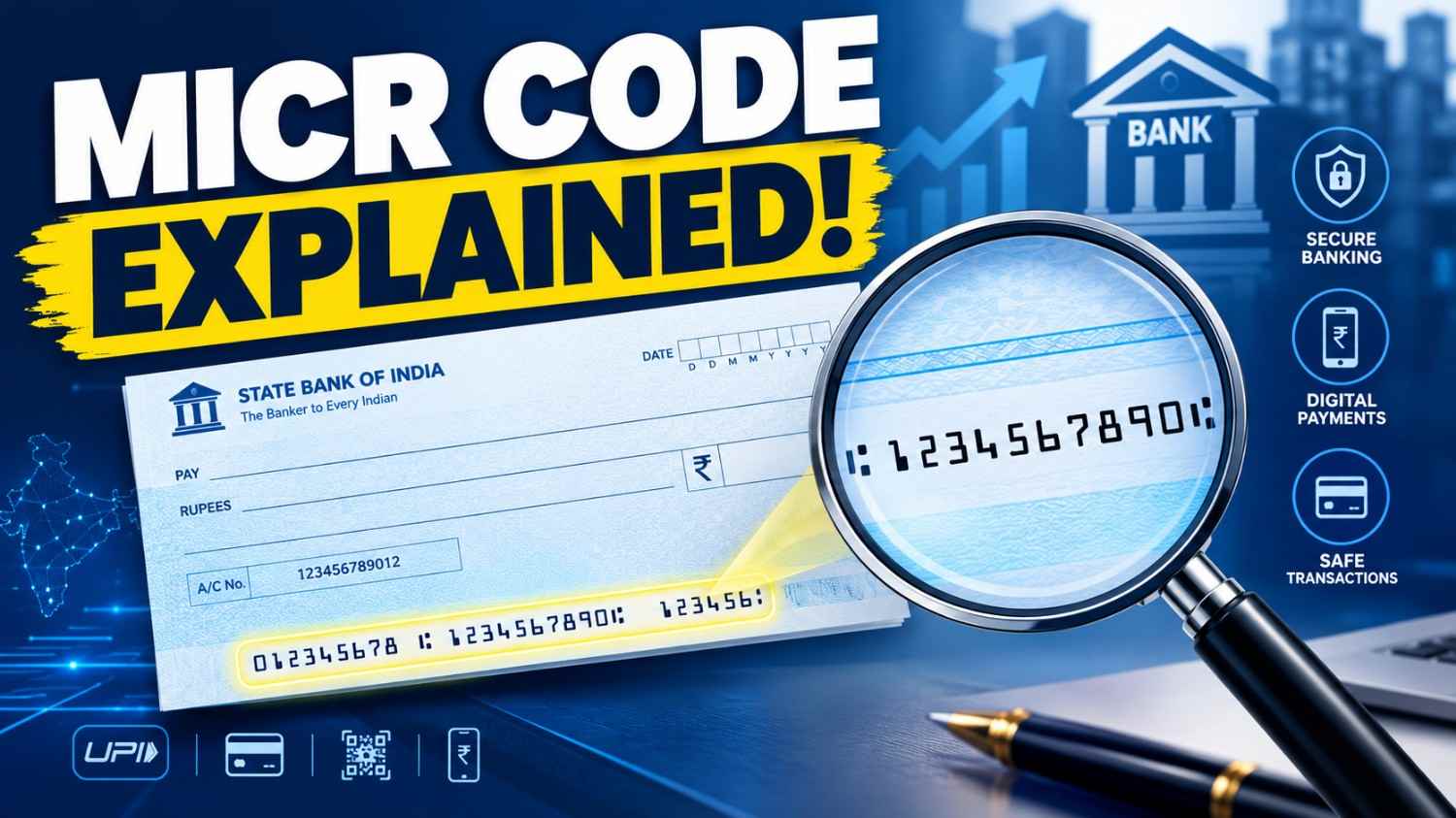
A MICR code is a nine-digit number printed at the bottom of a bank cheque. MICR stands for Magnetic Ink Character Recognition, a technology that helps banks identify and process cheques efficiently.
MICR Code: Meaning, 9-Digit Number & How It Works
If you have ever looked at the bottom of a cheque and noticed a series of numbers printed in a special-looking font, that information is part of the MICR system. But what do those nine digits actually mean, and why is the MICR code important?
Let’s understand the MICR code meaning, format, uses, location, and difference from other banking codes in simple terms.
What Is a MICR Code?
MICR code is a 9-digit numeric code used to identify a bank branch for cheque processing in India. It is generally printed at the bottom of cheques using MICR ink, allowing machines to read the characters quickly and accurately.
The code is particularly associated with the electronic processing and clearing of cheques. Instead of relying entirely on manual identification, banks can use MICR technology to recognize important cheque information during the clearing process.
A MICR code typically follows this structure:
XXXYYYZZZ
Here:
- First 3 digits represent the city or location code.
- Next 3 digits identify the bank.
- Last 3 digits identify the specific bank branch.
For example, a hypothetical MICR code could look like 110002123. The exact digits and their meaning depend on the banking institution and branch.
What Does MICR Stand For?
MICR stands for Magnetic Ink Character Recognition.
The name describes how the system works:
- Magnetic refers to the special magnetic properties of the ink.
- Ink refers to the ink used to print the characters.
- Character Recognition refers to machines reading those printed characters.
This technology allows cheque-processing systems to capture information quickly while reducing the need for manual data entry.
MICR is therefore not simply a number printed on a cheque. It is part of a larger system designed to make cheque processing faster and more reliable.
What Do the 9 Digits of a MICR Code Mean?
The nine digits of a MICR code are divided into three groups of three digits.
First Three Digits: City Code
The first three digits represent the city or geographical location associated with the bank branch.
This helps identify the location within the banking and cheque-clearing network.
Next Three Digits: Bank Code
The middle three digits identify the bank.
This allows the cheque-processing system to determine which banking institution the cheque belongs to.
Last Three Digits: Branch Code
The final three digits identify the specific branch.
Together, these three sections create a nine-digit identifier for the relevant bank branch.
This format makes the MICR code useful for routing and processing cheques through the banking system.
Where Can You Find the MICR Code on a Cheque?
The MICR code is normally printed at the bottom of an Indian bank cheque, within the MICR band.
The bottom portion of a cheque can contain several important numbers and symbols. The MICR code is one of the identifiers used in cheque processing.
If you need the MICR code for a particular branch, you can usually find it on a cheque issued by that branch or obtain it through the bank's official channels.
Why Is the MICR Code Important?
The MICR code plays an important role in cheque clearing and processing.
Faster Cheque Processing
Because MICR characters can be read electronically, banks can process large volumes of cheques more efficiently than if every cheque had to be manually identified.
Accurate Branch Identification
The code helps identify the bank and branch associated with a cheque, supporting the clearing and routing process.
Reduced Manual Work
Automated recognition reduces the amount of information that needs to be entered manually during cheque processing.
Supports Cheque Clearing
MICR information forms part of the infrastructure used to process cheques between banks and their branches.
MICR Code vs IFSC Code
MICR and IFSC are both banking identifiers, but they serve different purposes.
| Feature | MICR Code | IFSC Code |
|---|---|---|
| Full form | Magnetic Ink Character Recognition | Indian Financial System Code |
| Length | 9 digits | 11 characters |
| Main use | Cheque processing and clearing | Electronic fund transfers |
| Format | Numeric | Letters and numbers |
| Commonly associated with | Cheques | NEFT, RTGS and other electronic transfers |
| Branch identification | Yes | Yes |
A simple way to remember the difference is:
MICR = mainly associated with cheque processing
IFSC = mainly associated with electronic bank transfers
Although both identify banking institutions and branches, they are not interchangeable.
How Does MICR Technology Work?
MICR technology uses specially printed characters that can be recognized by machines.
When a cheque enters the clearing process, automated equipment can read the MICR information printed along the bottom of the cheque. The system can then use this information to help identify and route the cheque correctly.
The advantage is speed and consistency. Banks process significant volumes of financial documents, so automated recognition can make the process more efficient than relying exclusively on visual inspection and manual entry.
The MICR system was designed specifically to work with financial documents where reliable and rapid processing is important.
Is MICR Code the Same as the Cheque Number?
No. A MICR code and cheque number are different.
The cheque number identifies a particular cheque, while the MICR code identifies the relevant bank and branch within the MICR clearing system.
For example, a person may have several cheques from the same cheque book. Their individual cheque numbers will differ, but the MICR code may remain the same because the cheques are issued by the same branch.
Understanding this distinction is useful when reading the numbers printed at the bottom of a cheque.
Is MICR Code the Same for Every Branch of a Bank?
No. MICR codes are associated with specific bank branches, so different branches can have different MICR codes.
Even when two branches belong to the same bank, their branch identifiers can differ. Therefore, you should use the MICR code belonging to the specific branch associated with the cheque or account.
If you are asked to provide a MICR code for a banking transaction or document, verify the exact branch rather than assuming that every branch of the bank uses the same code.
How to Find Your Bank's MICR Code
There are several ways to find a MICR code.
Check Your Cheque
The easiest method is often to look at the bottom of a cheque issued by your bank branch. The MICR information is printed there as part of the cheque's MICR band.
Check Your Bank's Official Website
Many banks provide branch information through their official websites. Search for the relevant branch and verify its MICR details.
Contact the Bank
You can also contact your bank branch or customer service and request the correct MICR code.
Check Official Banking Documents
Depending on the bank, the MICR code may also appear in certain account or branch-related documents.
Always verify the code before using it, particularly when dealing with important banking documentation.
Can a MICR Code Change?
Yes, a MICR code can potentially change if banking structures, branch details, mergers, relocations, or other administrative changes occur.
For this reason, it is better to verify the current MICR code rather than relying indefinitely on an old cheque or an unofficial online listing.
If a branch has undergone significant changes, check the latest information provided by the bank or an authoritative banking source.
Are MICR Codes Still Relevant?
MICR remains relevant to the cheque-processing system even though digital payments have become increasingly common.
India has experienced rapid growth in electronic payment methods, but cheques continue to be used for certain personal, commercial, institutional, and financial transactions.
MICR technology helps banks process these paper-based instruments efficiently.
It is therefore useful to understand MICR even if you primarily use online banking, UPI, cards, NEFT, or other digital payment methods.
Common Mistakes About MICR Codes
People often confuse MICR with other numbers printed on a cheque.
Here are some common mistakes to avoid:
Confusing MICR With IFSC
MICR and IFSC identify banking branches for different purposes. Do not substitute one for the other.
Assuming MICR Is the Account Number
The MICR code identifies the bank and branch. It is not your personal bank account number.
Assuming It Is the Cheque Number
The cheque number identifies an individual cheque. MICR serves a different purpose.
Using an Unverified Code
A code found on an outdated or unreliable website may not reflect current branch information. Verify important banking details through an official source whenever possible.
Frequently Asked Questions
What is a MICR code?
A MICR code is a nine-digit code used in India's banking system to identify a bank branch for cheque processing. MICR stands for Magnetic Ink Character Recognition.
How many digits are in a MICR code?
A standard MICR code in India contains 9 digits.
What do the first three digits of a MICR code represent?
The first three digits generally represent the city or location code associated with the branch.
What do the last three digits of a MICR code represent?
The final three digits identify the specific bank branch.
Where is the MICR code printed?
The MICR code is normally printed at the bottom of a cheque, as part of the MICR band.
Is MICR code required for online money transfers?
MICR is primarily associated with cheque processing. Electronic transfers generally use identifiers such as IFSC rather than MICR.
Is MICR code the same as IFSC?
No. MICR is a nine-digit code primarily associated with cheque processing, while IFSC is an 11-character code used to identify bank branches for electronic fund transfers.
Can two branches have the same MICR code?
MICR codes are designed to identify specific branches within the clearing system. Therefore, you should use the code corresponding to the exact branch rather than assuming codes are shared across branches.
Conclusion
The MICR code is a 9-digit banking identifier used primarily for cheque processing in India. Its three groups of digits help identify the city or location, bank, and specific branch.
Although digital payments have transformed banking, MICR remains an important part of India's cheque-clearing infrastructure. Knowing where to find the MICR code—and understanding how it differs from an IFSC code, account number, and cheque number—can help you avoid mistakes when handling banking documents.
If you need a MICR code for a specific transaction or document, always verify the current details with the relevant bank or an official banking source.



Write a comment