
In today’s digital world, most people rely on the internet to look up banking details. However, there are many situations where internet access is unavailable or unreliable. During such times, knowing how to find a bank IFSC code without internet becomes extremely useful and practical.
This detailed guide explains all reliable offline methods to find your bank IFSC code. Whether you are filling out a form, making a transaction, or assisting someone without smartphone access, these methods will help you get the correct IFSC code confidently.
Introduction to Finding Bank IFSC Code Without Internet
Your introduction is clear and useful, but it can be made more engaging, natural, and SEO-focused while preserving the original meaning:
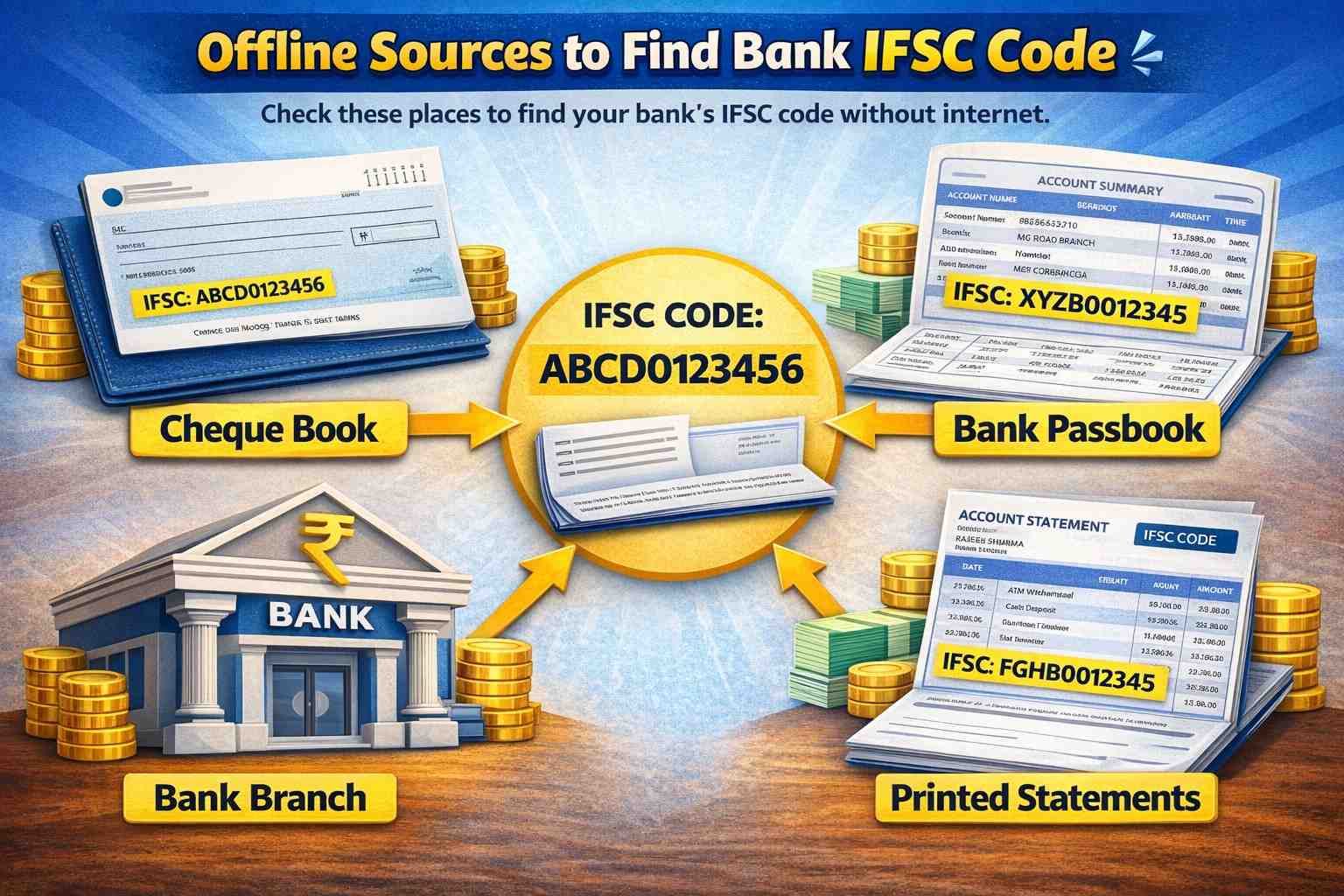
Finding a bank IFSC code without internet access is easier than many people think. You don’t always need a banking app, Google search, or online IFSC finder to get this important banking detail. Banks provide IFSC codes through several offline sources, including passbooks, cheque books, account statements, and printed banking documents.
Knowing where to find an IFSC code offline can be especially helpful when you need to make a bank transfer but have limited or no internet access. It can also save time and help prevent errors, failed transactions, or unnecessary trips to the bank. With a few simple offline methods, you can quickly find the correct IFSC code using information you may already have at home.
Understanding What an IFSC Code Is and Why It Matters
1. Meaning of IFSC Code
An IFSC code, short for Indian Financial System Code, is an 11-character alphanumeric code used to identify a specific bank branch in India. It plays an important role in electronic fund transfers by helping banks route payments to the correct branch.
IFSC codes are commonly required for transactions through systems such as NEFT, RTGS, and IMPS. Because each branch has its own code, entering the correct IFSC is essential when transferring money to a bank account.
2. Importance of IFSC in Banking Transactions
The IFSC code ensures money reaches the correct bank branch without errors. A wrong IFSC can cause transaction failures or delays. That is why verifying the correct code is critical before initiating any bank transfer.
Even when using offline modes, banks insist on accurate IFSC details to maintain transaction integrity and regulatory compliance.
Checking IFSC Code on Bank Cheque Book
1. Where IFSC Is Printed on Cheques
Most banks print the IFSC code on every cheque leaf. It is usually located at the bottom or top corner of the cheque. The code is printed clearly along with other bank details.
This makes cheque books one of the easiest offline sources for IFSC codes, especially for account holders.
2. Advantages of Using a Cheque Book
Cheque books are always accessible at home or office. They do not require electricity, internet, or technical knowledge. The IFSC printed is always accurate for that specific branch.
If you have an old cheque book, the IFSC remains valid unless the branch has been merged or relocated.
Finding IFSC Code in Bank Passbook
1. IFSC Details in Passbook Entries
Most bank passbooks include branch details on the first page. This section usually displays the branch name, address, account number, and IFSC code.
Passbooks are officially issued by banks, making them a trusted offline reference.
2. Why Passbooks Are Reliable Offline Sources
Passbooks are updated by bank systems and reflect accurate branch information. They are especially useful for people who do not use cheque books or digital banking.
For senior citizens and rural customers, passbooks remain the most dependable banking document.
Visiting the Bank Branch Directly
1. Asking Bank Staff for IFSC Code
Visiting your bank branch is one of the most reliable offline methods for finding an IFSC code. Bank staff can check the branch records and provide the correct IFSC for your account or another branch you need for a transaction.
If you visit the branch, carry a valid identification document and relevant account details if required for verification. This method is particularly useful when your printed documents contain an outdated code or you are unsure which branch’s IFSC should be used.
2. Using Branch Notice Boards and Forms
You may also find the IFSC code displayed on notice boards, forms, or other printed materials available inside a bank branch. Deposit slips, account opening forms, brochures, and customer information sheets may include the branch’s IFSC along with other banking details.
This is a convenient option if you are already visiting the branch and do not have your passbook or cheque book with you. Before using a code found on a general form or notice board, make sure it corresponds to the correct branch, especially when completing a transaction for another account
Using Old Bank Statements or Account Documents
1. IFSC on Printed Bank Statements
A printed bank statement is another simple way to find your branch’s IFSC code without using the internet. Depending on the bank, the IFSC may appear near the branch name, account details, or other banking information at the top or bottom of the statement.
If you have an older statement, check the date before relying on the code. Branch details can change after mergers, relocations, or other banking updates, so confirm the IFSC with a recent document or your bank if you are unsure.
2. Account Opening Documents and Welcome Letters
Your account opening documents, welcome letter, or welcome kit can be another convenient offline source for finding your bank’s IFSC code. Banks often include the home branch name and its IFSC code in these materials when an account is opened.
If you still have these documents, check the sections containing your branch or account details. However, if the documents are several years old, confirm that the IFSC is still valid before using it for a transaction, particularly if the bank has undergone a merger or your branch details have changed.
Getting IFSC Code Through SMS or Phone Banking
1. Using SMS Banking Services
Some banks provide SMS banking services that let customers request basic account or branch information, including IFSC details, without an internet connection. This can be useful when you are using a basic mobile phone or have no access to mobile data.
However, the exact SMS format and availability vary from one bank to another. Before sending a request, check the instructions provided by your bank in its official documents or customer service materials. Using the correct format helps ensure you receive the relevant information without unnecessary delays.
2. Calling Customer Care for IFSC Information
You can also find your bank’s IFSC code by calling its official customer care helpline. After verifying your identity and account details, a bank representative may be able to provide the IFSC code for your branch.
Keep basic information such as your account number, branch name, or registered mobile number available during the call. Make sure you use the bank’s official customer care number printed on your passbook, cheque book, debit card, or other trusted banking documents to avoid fraudulent calls.
Common Mistakes to Avoid When Finding IFSC Offline
1. Confusing Branch IFSC with Head Office IFSC
One common mistake is assuming that the head office and local branch use the same IFSC code. In reality, an IFSC is assigned to a specific bank branch, so different branches generally have different codes.
Before initiating a money transfer, always verify that the IFSC belongs to the exact branch linked to the recipient’s account. Using an incorrect or outdated branch IFSC can result in a failed transaction, delays, or the need to correct the transfer details.
2. Using Outdated Printed Materials
Old passbooks, cheque books, account statements, or other printed banking documents may contain an IFSC code that is no longer valid. Bank mergers, branch transfers, closures, and relocations can sometimes lead to changes in branch details.
If your document is several years old, don’t rely on it blindly. Compare the IFSC with a more recent bank document or confirm the code directly with the bank before making an important transaction. This simple check can help prevent payment delays and failed transfers.
Tips to Store IFSC Code for Future Offline Use
1. Writing IFSC in Personal Records
Keeping your bank’s IFSC code in a personal record can save time when you need it for a transfer, especially during travel or when internet access is unavailable. You can note the branch name, IFSC code, and other non-sensitive banking information in a secure notebook or diary.
Avoid writing passwords, PINs, OTPs, card security codes, or other highly sensitive credentials alongside the IFSC. Store your records somewhere safe and update the IFSC whenever your bank confirms a change to the branch details.
2. Keeping Multiple Document Copies
Keeping copies of important bank documents can make it easier to find your IFSC code when the original document is unavailable. You can securely store photocopies of your passbook, cancelled cheque, or bank correspondence in a safe place.
However, these documents may contain sensitive account information, so avoid leaving copies in easily accessible locations. Keep only the documents you genuinely need, and periodically check whether the information is still current, particularly after a bank merger, branch relocation, or account change.
FAQ
What is the easiest offline way to find an IFSC code?
The easiest offline way is checking your bank cheque book or passbook. Both usually display the IFSC code clearly and accurately.
Can I find IFSC code without having a bank account?
Yes, you can visit the bank branch directly and ask for the IFSC code of any branch. Banks provide this information publicly.
Is IFSC code the same for all branches of a bank?
No, each branch has a unique IFSC code. Only the first four characters representing the bank remain the same.
Do IFSC codes change over time?
IFSC codes usually remain the same unless a branch is merged, relocated, or restructured. In such cases, banks issue updated codes.
Can bank staff refuse to give IFSC code offline?
No, IFSC codes are public information. Bank staff generally provide them without any issue.
Conclusion
Knowing how to find a bank IFSC code without internet is a valuable skill, especially in situations where digital access is limited. Cheque books, passbooks, bank branches, printed statements, and phone banking all provide reliable offline solutions.
By using these methods, you can complete banking tasks smoothly without delays. Keeping your banking documents organized ensures you always have access to important information when you need it most.



Write a comment