
Your CIBIL score plays a crucial role in your financial life. Whether you're applying for a personal loan, home loan, credit card, or even negotiating better interest rates, lenders closely examine your credit score before making decisions.
The good news is that improving your CIBIL score doesn't always take years. By following the right strategies consistently, you can significantly improve your credit profile and increase your chances of loan approvals much faster than most people think.
In this comprehensive guide, you'll discover 15 proven tips that can help improve your CIBIL score quickly while building long-term financial credibility.
Understanding CIBIL Score and Why It Matters
1. What Is a CIBIL Score?
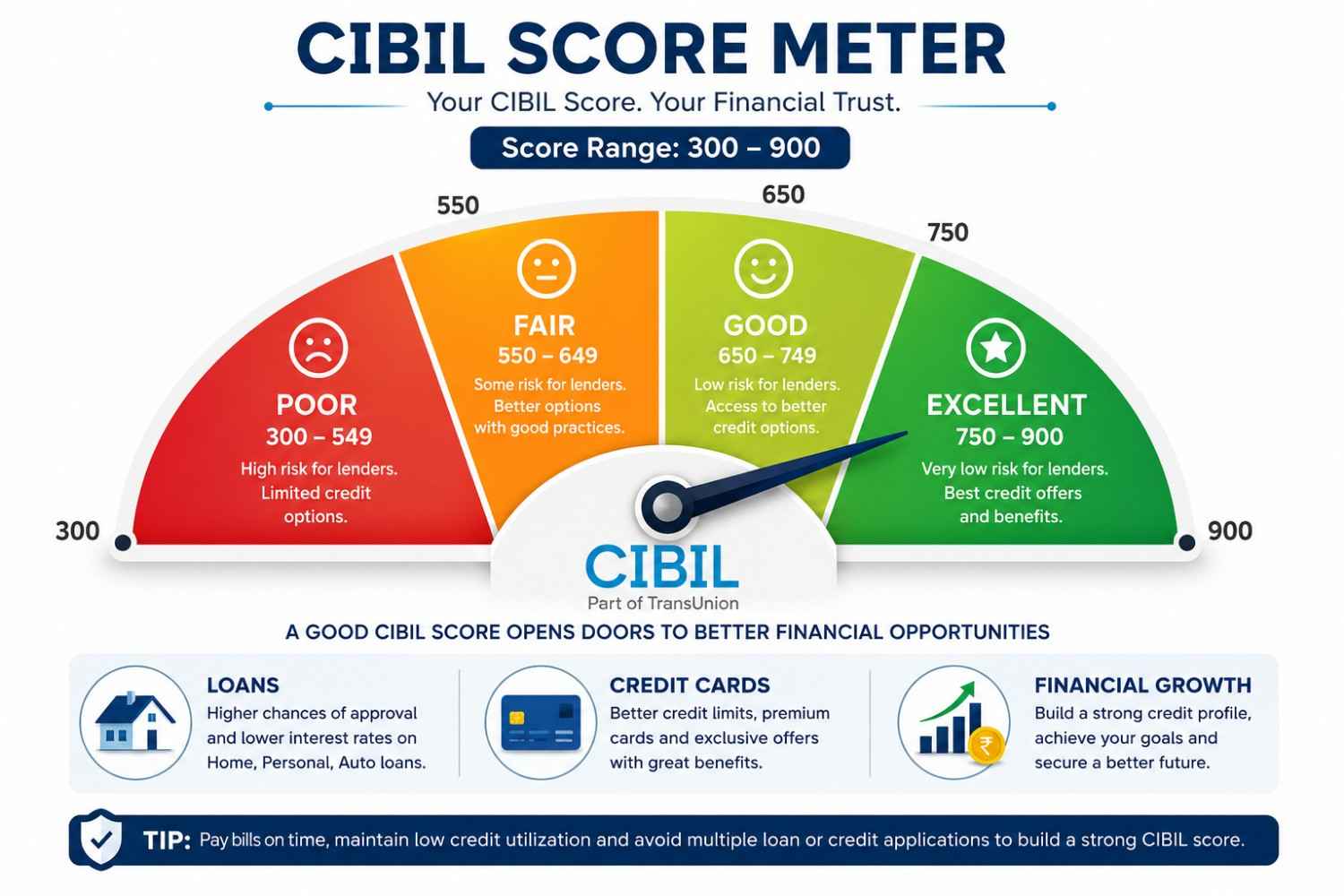
A CIBIL score is a three-digit number ranging from 300 to 900 that represents your creditworthiness. It is calculated using information from your credit history, including your repayment behavior, credit utilization, outstanding debts, length of credit history, and borrowing patterns.
Lenders such as banks and financial institutions use your CIBIL score to assess how responsibly you have managed credit in the past. Generally, a higher score indicates lower credit risk, which may improve your chances of getting loans or credit cards and may help you access better terms.
Generally:
- 750 and above: Excellent
- 700–749: Good
- 650–699: Fair
- Below 650: Needs improvement
2. Why Banks Check Your CIBIL Score
Financial institutions use your CIBIL score to assess risk before approving:
- Personal loans
- Home loans
- Car loans
- Credit cards
- Business loans
A higher score often means:
- Faster loan approvals
- Lower interest rates
- Higher credit limits
- Better financial opportunities
Check Your Credit Report for Errors
1. Download Your Latest Credit Report
The first step to improving your CIBIL score is to check your latest credit report and understand your current credit profile. Review the report carefully for details such as active and closed loans, credit card accounts, outstanding balances, repayment history, and recent credit inquiries.
Pay particular attention to any incorrect or unfamiliar information, such as missed payments you did not make, duplicate accounts, incorrect outstanding balances, or unauthorized credit inquiries. Identifying such errors early can help you take corrective action and prevent inaccurate information from affecting your CIBIL score.
Look for:
- Incorrect loan amounts
- Duplicate accounts
- Wrong personal information
- Closed loans marked as active
- Unauthorized credit inquiries
2. Dispute Any Incorrect Information Immediately
Even small errors in your credit report can negatively affect your CIBIL score, especially if they involve missed payments, incorrect outstanding balances, duplicate accounts, or unfamiliar credit inquiries. If you find any inaccurate information, raise a dispute with CIBIL and, where necessary, contact the relevant lender to request a correction.
Keep copies of supporting documents and follow up until the information is properly updated. Correcting genuine errors can help ensure that your credit report accurately reflects your actual credit history.
If you find inaccuracies:
- File a dispute with the credit bureau.
- Submit supporting documents.
- Follow up regularly until the issue is resolved.
Correcting reporting errors can sometimes increase your score surprisingly quickly.
Pay All EMIs and Credit Card Bills on Time
1. Payment History Has the Highest Impact
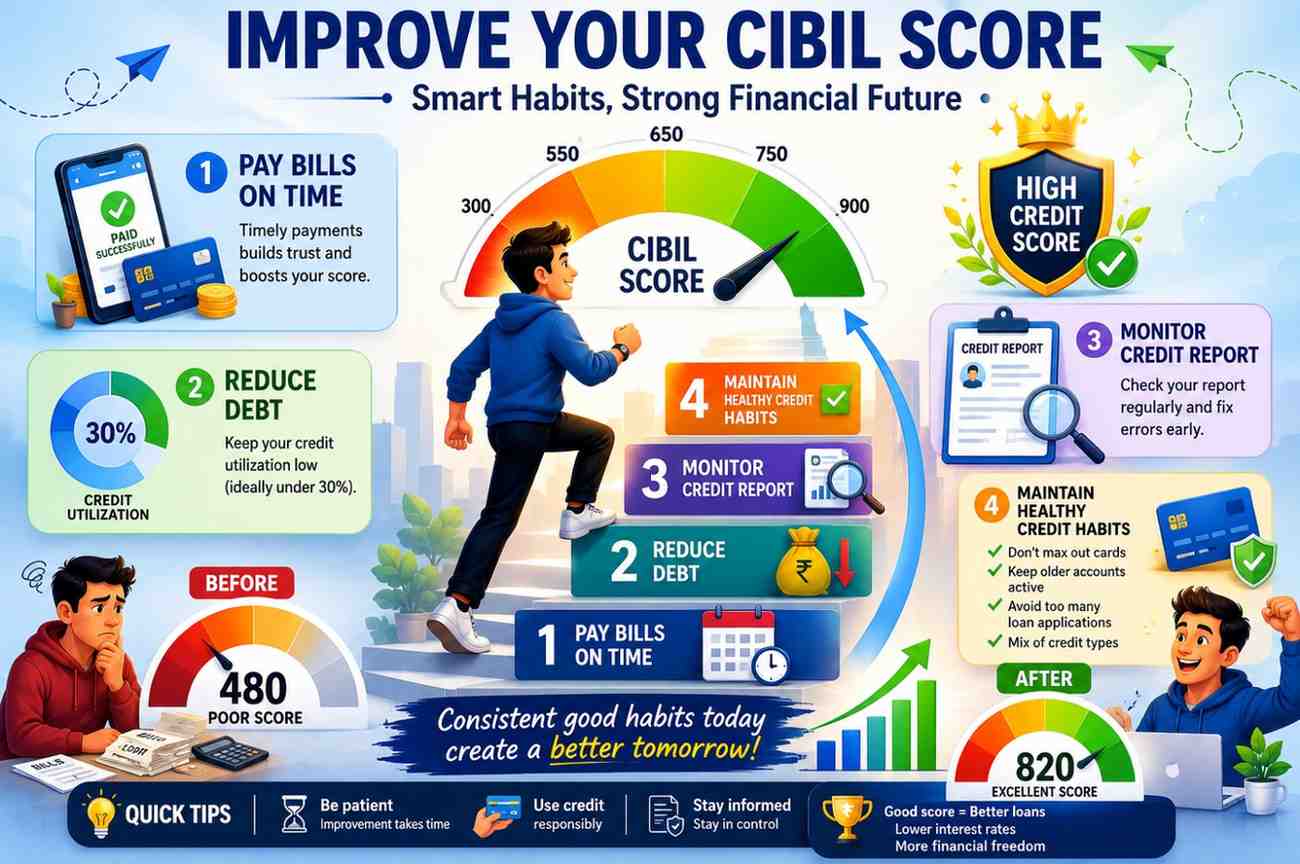
Your payment history is one of the most important factors influencing your CIBIL score. Consistently paying EMIs, credit card bills, and other credit obligations on time demonstrates responsible borrowing behavior and can support a healthy score.
Even a single missed or delayed payment may negatively affect your credit profile, particularly if the account becomes significantly overdue. To avoid this, set up payment reminders or automatic payments and make sure you maintain sufficient funds in your account before the due date.
Missing even one payment can:
- Reduce your credit score
- Remain on your report for years
- Affect future loan approvals
Always prioritize timely payments.
2. Set Up Automatic Payments
To avoid accidental delays:
- Enable auto-pay: Set up automatic payments for credit card bills and loan EMIs whenever your lender or bank provides the option.
- Keep sufficient funds available: Make sure your linked bank account has enough balance before the scheduled payment date.
- Choose reminders as a backup: Set calendar or banking alerts so you can monitor upcoming payments.
- Review payments regularly: Check your bank and credit card statements to ensure scheduled payments are processed correctly.
Consistently paying your bills on time can help maintain a positive repayment history and support a healthy CIBIL score over time.
Reduce Your Credit Utilization Ratio
1. Understand Credit Utilization
Credit utilization refers to the percentage of available credit you use.
Example:
- Credit limit: ₹100,000
- Usage: ₹80,000
- Utilization ratio: 80%
Experts recommend keeping utilization below 30%.
2. Strategies to Lower Utilization Quickly
You can reduce utilization by:
- Paying outstanding balances early
- Making multiple payments monthly
- Requesting higher credit limits
- Avoiding unnecessary spending
Lower utilization often leads to faster improvements in your credit score.
Avoid Applying for Multiple Loans Simultaneously
1. Every Loan Application Creates a Hard Inquiry
When you apply for credit, lenders perform a hard inquiry.
Too many inquiries indicate:
- Financial stress
- Increased borrowing risk
- Poor credit management
This can reduce your score.
2. Space Out Your Applications
Instead of applying everywhere:
- Research eligibility first
- Apply only when necessary
- Wait several months between applications
Selective borrowing improves your credit profile.
Clear Outstanding Debts Strategically
1. Focus on High-Interest Debt First
If you have multiple debts, prioritize:
- Credit card debt
- Personal loans
- High-interest borrowings
Reducing expensive debt helps both your finances and credit score.
2. Consider Debt Consolidation
Debt consolidation combines multiple debts into one manageable payment.
Benefits include:
- Simplified repayment
- Lower interest burden
- Reduced missed payments
- Better financial discipline
Keep Old Credit Accounts Active
1. Credit History Length Matters
Older accounts demonstrate long-term financial responsibility.
Closing old accounts may:
- Reduce your average account age
- Lower available credit
- Negatively impact your score
2. Use Older Cards Occasionally
Maintain older credit cards by:
- Making small purchases
- Paying bills on time
- Keeping balances low
This preserves your credit history.
Maintain a Healthy Credit Mix
1. Understand Credit Diversity
Lenders prefer borrowers who manage different types of credit responsibly.
Examples include:
- Home loans
- Personal loans
- Auto loans
- Credit cards
- Consumer durable loans
2. Avoid Overdependence on One Credit Type
Relying solely on credit cards can increase risk perception.
A balanced credit portfolio signals responsible financial behavior.
Increase Your Credit Limit
1. Higher Limits Reduce Utilization
Requesting a credit limit increase can improve your utilization ratio immediately.
Example:
| Credit Limit | Outstanding Balance | Utilization |
|---|---|---|
| ₹100,000 | ₹50,000 | 50% |
| ₹200,000 | ₹50,000 | 25% |
Lower utilization often supports higher scores.
2. Request Increases Carefully
Before requesting:
- Maintain good repayment history
- Avoid recent defaults
- Ensure stable income
Banks are more likely to approve responsible customers.
Avoid Settling Loans If Possible
1. Settlement Impacts Credit Score
When you settle a loan for less than the full amount, lenders record it as "settled" rather than "closed."
This may:
- Reduce lender confidence
- Lower creditworthiness
- Affect future borrowing opportunities
2. Aim for Full Closure
Whenever possible:
- Pay the entire outstanding amount
- Obtain a No Objection Certificate (NOC)
- Ensure records reflect "closed"
Monitor Your Credit Report Regularly
1. Monthly Monitoring Helps
Frequent monitoring allows you to:
- Detect fraud early
- Track progress
- Correct errors quickly
- Improve financial awareness
2. Create a Credit Improvement Plan
Track:
- Payment dates
- Debt reduction goals
- Credit utilization levels
- Score improvements
Regular monitoring accelerates progress.
Become an Authorized User
1. Benefit from Strong Credit Profiles
If a trusted family member has excellent credit history, becoming an authorized user on their account may positively influence your profile.
2. Choose Carefully
Ensure the primary account holder:
- Pays bills on time
- Maintains low balances
- Has a long credit history
Poor account behavior can also negatively affect you.
Avoid Frequently Closing Credit Cards
1. Closing Cards Can Reduce Scores
Closing cards may:
- Increase utilization ratios
- Shorten credit history
- Reduce available credit
2. Keep No-Fee Cards Open
If a card has no annual fee, consider keeping it active with minimal usage.
Use Secured Credit Cards to Rebuild Credit
1. Secured Cards Help Establish Credit
If your score is very low, secured credit cards can help rebuild credit history.
These cards require a fixed deposit as security.
2. Practice Responsible Usage
To maximize benefits:
- Spend minimally
- Pay balances fully
- Avoid late payments
Over time, this improves your credit profile.
Resolve Loan Defaults Immediately
1. Outstanding Defaults Severely Damage Scores
Outstanding defaults can have a significant negative impact on your CIBIL score and may make it harder to qualify for new loans or credit cards. A default signals to lenders that a previous credit obligation was not repaid as agreed, increasing the perceived risk of lending to you.
If you have an outstanding default, prioritize resolving the overdue amount according to your lender’s terms. After making the payment or reaching a settlement, check your credit report to ensure that the account status and payment information are accurately updated. Keep in mind that resolving a default does not necessarily remove the account history immediately; accurate negative information may continue to appear on your credit report for a period of time.
They indicate:
- Financial instability
- Increased lending risk
2. Negotiate Repayment Plans
If repayment is difficult, contact your lender as early as possible rather than allowing missed payments to accumulate. Depending on your circumstances and the lender's policies, you may be able to discuss options such as restructuring the repayment schedule, changing the EMI arrangement, or setting up a mutually agreed repayment plan.
Before accepting any arrangement, understand how it may affect your account status, total repayment amount, interest, and credit report. Most importantly, avoid making promises you cannot keep. A realistic repayment plan that you consistently follow is better than repeatedly missing payments.
- Contact lenders early
- Request restructuring
- Create realistic repayment schedules
Resolving defaults significantly improves long-term credit health.
Maintain Financial Discipline Consistently
1. Build Healthy Financial Habits
Successful credit management requires:
- Budgeting
- Controlled spending
- Emergency savings
- Responsible borrowing
2. Think Long-Term
Improving your CIBIL score isn't only about getting loans. It's about building lifelong financial credibility and freedom.
Consistent habits produce sustainable results.
How Fast Can You Improve Your CIBIL Score?
1. Typical Improvement Timeline
Improvement speed depends on your financial situation:
| Action | Estimated Impact Timeline |
| Correcting report errors | 30–60 days |
| Reducing utilization | 30–90 days |
| Paying overdue accounts | 3–6 months |
| Building payment history | 6–12 months |
| Recovering from defaults | 12–24 months |
2. Patience and Consistency Matter
Quick improvements are possible, but maintaining healthy credit habits is the key to long-term success.
FAQ
1. What is the fastest way to improve a CIBIL score?
The fastest methods include paying overdue balances, reducing credit utilization below 30%, correcting credit report errors, and avoiding new loan applications.
2. Can my CIBIL score improve in 30 days?
Yes. If you reduce outstanding credit card balances or successfully correct reporting errors, you may notice improvements within 30 to 60 days.
3. Does checking my own CIBIL score reduce it?
No. Checking your own credit report is considered a soft inquiry and does not affect your credit score.
4. Is 750 a good CIBIL score?
Yes. A score of 750 or above is generally considered excellent and increases your chances of obtaining loans and credit cards on favorable terms.
5. How long do late payments affect a CIBIL score?
Late payments can remain on your credit report for several years, although their impact decreases over time if you maintain consistent repayment behavior afterward.
Conclusion
Improving your CIBIL score quickly is possible when you focus on the factors that matter most: timely payments, low credit utilization, responsible borrowing, and regular credit monitoring. While some improvements can happen within weeks, lasting financial credibility requires consistency and discipline.
Start implementing these 15 proven strategies today. Every positive financial decision you make strengthens your credit profile and brings you closer to better loan approvals, lower interest rates, and greater financial freedom.


Write a comment