
Sending money online has become second nature, whether through NEFT, RTGS, or IMPS. But a single mistake—like entering the wrong IFSC code—can trigger instant panic. Many people assume their money is lost forever, but that’s not always true.
This detailed guide explains exactly what happens when a wrong IFSC code is used, whether your money will be refunded, how long it may take, and what actions you should take immediately to maximize recovery.
Introduction to Wrong IFSC Code in Bank Transactions
An IFSC code plays a crucial role in identifying the destination bank branch during electronic fund transfers such as NEFT, RTGS, and IMPS. If the IFSC code entered is incorrect, the banking system may be unable to route the transaction properly. Depending on whether the incorrect code corresponds to a valid bank branch, the transfer may be rejected, returned to the sender, delayed, or, in rare cases, processed to an unintended account when other transaction details also match. Understanding what happens when a wrong IFSC code is used can help customers take quick action and avoid unnecessary stress during bank transactions.
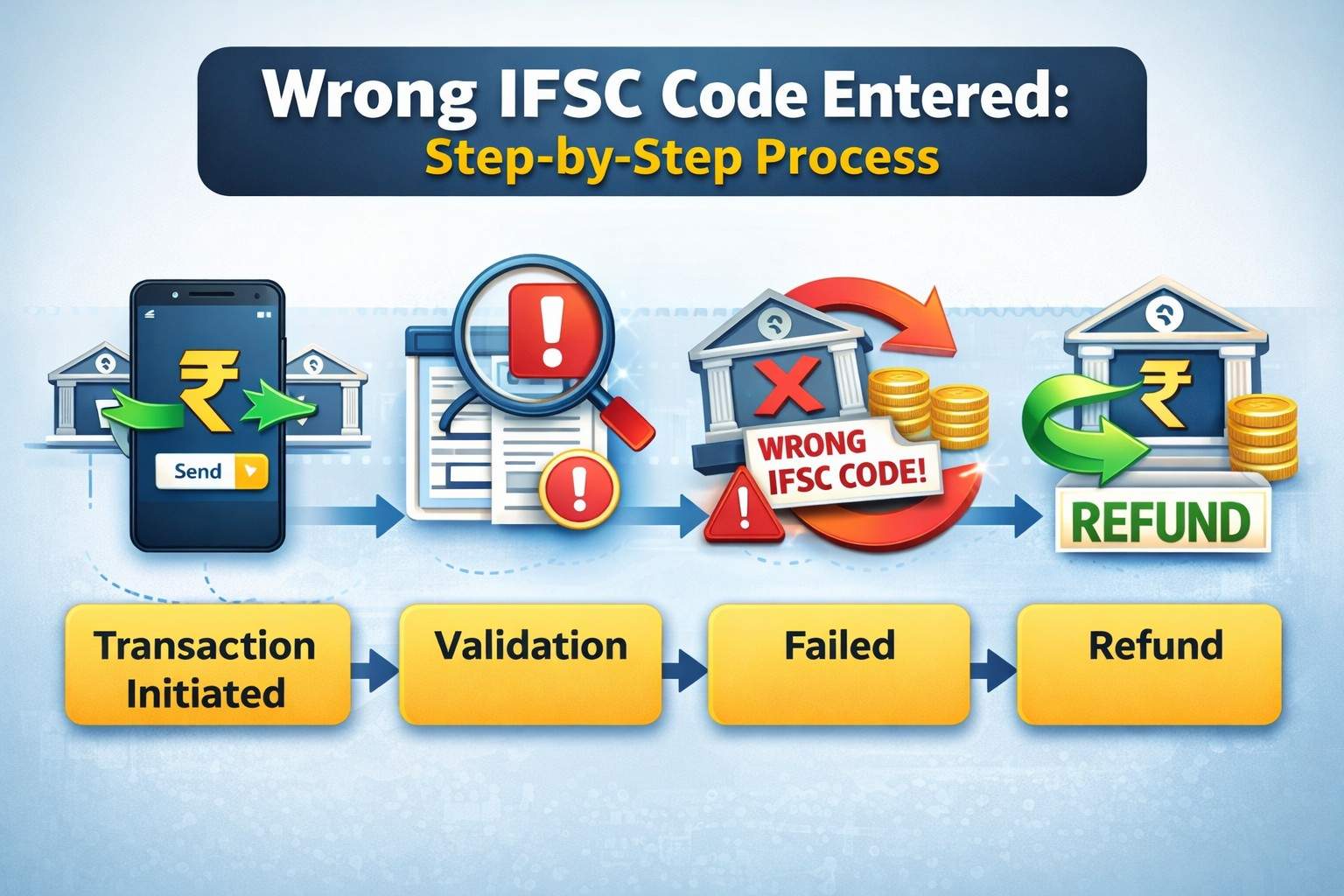
In most cases, Indian banking systems are designed with safeguards. These checks prevent money from being credited to the wrong account when critical details don’t match.
What Is an IFSC Code and Why It Matters in Transactions
1. Understanding the Structure of an IFSC Code
An IFSC code is an 11-character alphanumeric code that uniquely identifies a bank branch. The first four characters represent the bank, the fifth is usually zero, and the last six indicate the branch.
Even a small typo can redirect the transaction or cause it to fail entirely.
2. Role of IFSC Code in NEFT, RTGS, and IMPS
The IFSC code ensures your money reaches the correct branch before being credited to the beneficiary account. Without a valid match between IFSC and account number, transactions usually cannot be completed.
What Happens If You Enter the Wrong IFSC Code
1. Scenario Where Account Number Is Correct but IFSC Is Wrong
If the account number is correct but the IFSC code is incorrect or does not correspond to the beneficiary’s bank branch, the transaction is typically rejected or fails during processing. In most cases, the amount is not credited to the intended beneficiary and is returned to the sender’s account, although the reversal may take some time depending on the bank and payment method.
2. Scenario Where Both IFSC and Account Number Exist
In rare cases, the incorrect IFSC code may belong to a valid bank branch, and the entered account number may also exist at that branch. Depending on the bank’s validation process and transaction details, the transfer could be credited to an unintended account. If this happens, the sender should immediately contact their bank and report the incorrect transaction details to begin the recovery process.
Will Money Be Refunded If Wrong IFSC Code Is Used
1. Automatic Reversal by Bank Systems
In many cases, yes. If an incorrect IFSC code makes the beneficiary details invalid or prevents the transaction from being processed, the bank may reject the transfer and return the funds to the sender’s account. However, the outcome depends on whether the payment was rejected before processing or was successfully credited to another valid account.
If the transfer has already been completed, do not assume an automatic refund. Contact your bank promptly and provide the transaction reference number so the bank can trace the payment and guide you through the recovery process.
2. Time Taken for Refund
The reversal time can vary depending on the payment method, the banks involved, and when the error is identified. NEFT, RTGS, and IMPS do not necessarily follow one fixed refund timeline, so quoted timeframes should be treated as indicative rather than guaranteed.
If the money does not return within the timeframe communicated by your bank, contact customer support or your branch with the transaction details. Acting quickly can make it easier for the bank to investigate and initiate the appropriate reversal or recovery process.
Refund Timelines Based on Transaction Type
1. NEFT Transactions
NEFT transactions are processed in batches. If a mismatch or error is detected, the transaction amount is generally returned to the sender’s account within a few business days, subject to the bank’s processing and resolution timelines.
2. RTGS Transactions
RTGS transactions are processed in real time but still undergo necessary validation checks. If an RTGS transfer fails or is rejected, the amount is generally reversed to the sender’s account faster than a failed NEFT transaction, subject to the bank’s processing and resolution procedures.
3. IMPS Transactions
IMPS transactions are processed instantly, but validation or technical failures can still occur. If an IMPS transaction fails and the amount is debited, the amount is often automatically reversed to the sender’s account on the same day or within 24 hours, depending on the bank’s processing and resolution timelines.
What to Do Immediately After Entering a Wrong IFSC Code
1. Check Transaction Status
Log in to your bank account or mobile banking app and check the transaction status. Confirm whether it is successful, pending, or failed before taking any further action.
2. Contact Your Bank Without Delay
If the transaction is marked as successful, contact your bank’s customer support immediately and report the issue. Promptly reporting the transaction can help the bank investigate the matter and may improve your chances of recovering the funds.
How Banks Handle Wrong IFSC Code Complaints
1. Internal Bank Investigation Process
Banks trace the transaction using the relevant reference numbers and check whether the funds have been successfully credited to the recipient’s account or remain stuck in transit.
2. Inter-Bank Coordination
If another bank is involved in the transaction, your bank will coordinate with the recipient’s bank to investigate the issue and initiate a reversal or fund-recovery request where applicable.
Can Money Be Credited to the Wrong Person
1. Possibility of Incorrect Credit
Although uncommon, money can be credited to the wrong person if the IFSC code and account number entered during the transfer happen to match a different valid bank account. Banks generally process transactions based on the account details provided, so it is important to verify the beneficiary information carefully before authorizing the payment.
If you realize that you have transferred money to an unintended beneficiary, contact your bank as soon as possible and provide the transaction reference number, amount, date, and beneficiary details.
2. Legal and Bank Recovery Process
When a payment has been credited to the wrong account, the sending bank can typically coordinate with the recipient bank to initiate the recovery process. The recipient may be contacted and asked to authorize the reversal or return of the funds.
If the recipient does not cooperate, recovery may become more complicated and can involve formal banking complaints or appropriate legal and regulatory remedies. The exact process depends on the circumstances and applicable banking rules.
Common Mistakes That Lead to IFSC Code Errors
Copying an IFSC code from an outdated website, saved document, or old message can easily result in an incorrect code. Even a single wrong character may cause a bank transfer to fail or be routed incorrectly.
Before initiating a transaction, verify the IFSC code through your bank’s official website, mobile banking app, cheque book, or another current banking source. Avoid relying solely on codes saved from previous transactions.
2. Using Old IFSC Codes After Bank Mergers
Bank mergers and branch reorganizations can sometimes result in changes to IFSC codes. Continuing to use an old code after such a change may lead to transaction delays, rejection, or other payment issues.
If your bank has recently merged with another institution, check whether your branch’s IFSC code has been updated. Always use the latest code provided by the bank rather than assuming an older IFSC remains valid.
Tips to Avoid Wrong IFSC Code Transactions in the Future
1. Verify Beneficiary Details Twice
Before confirming a bank transfer, carefully cross-check the beneficiary’s account number, name, and IFSC code. A small typing error can cause a transaction to fail or create unnecessary delays. Taking a few extra seconds to review the details can prevent avoidable payment problems.
2. Use Bank-Verified Beneficiary Lists
Whenever possible, add beneficiaries through your bank’s official internet banking or mobile banking platform. Many banks require a short activation or verification period before a newly added beneficiary can receive funds. This process gives you an additional opportunity to confirm the account details and IFSC code before making an urgent transfer.
FAQ
What if the transaction shows successful but money not received
If the transaction is successful but the beneficiary hasn’t received the money, contact your bank immediately with the transaction reference number.
Can banks reverse money without recipient consent
Banks usually require recipient consent if money is credited to the wrong account. Without consent, legal procedures may apply.
Is wrong IFSC code considered my responsibility
Yes, entering correct details is the sender’s responsibility, but banks assist in recovery wherever possible.
How long should I wait before raising a complaint
You should raise a complaint within 24 hours if the transaction status is unclear or shows successful incorrectly.
Will I lose money permanently due to wrong IFSC
In most cases, no. The majority of wrong IFSC transactions are automatically reversed.
Conclusion
Using the wrong IFSC code in a transaction is stressful, but it rarely results in permanent loss. Banking systems are designed to detect mismatches and reverse funds automatically in most scenarios.
Quick action, timely communication with your bank, and accurate record-keeping significantly improve recovery chances. Staying cautious and double-checking details before every transfer remains the best prevention strategy.


Write a comment